Catalogue

Aluminium walkways: safe crossings over excavations on site

Safety on building and roadworks sites requires rigorous measures for crossing level differences, ditches and trenches. Aluminium walkways are the technical solution of choice for guaranteeing completely safe pedestrian access, eliminating the serious fall risks associated with makeshift planks or improvised structures. For a technical hardware store or building materials merchant, offering certified collective protective equipment means meeting a stringent regulatory requirement for contractors, protecting them from penalties and workplace accidents.

Choosing aluminium as the construction material offers an irreplaceable advantage: it combines high mechanical strength with low weight, making manual handling by operatives far easier. B2B retailers should select equipment fitted with compliant guardrails and non-slip decks, able to withstand corrosion and prolonged wear outdoors. Supplying compliant, durable equipment strengthens the store's reliability, positioning it as a strategic and indispensable partner for safe site set-up.

Structural features of the aluminium walkway

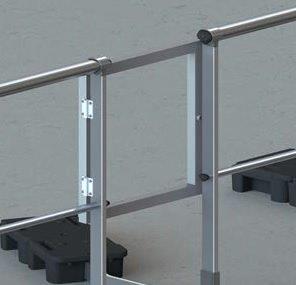
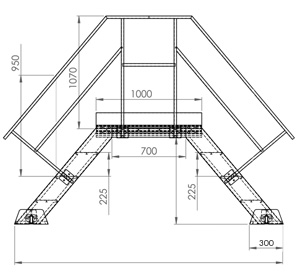
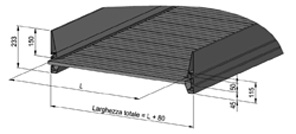
Crossing open excavations requires structures designed for maximum stability and strength. The deck of this equipment is made from chequer plate, a specific finish that ensures excellent grip even in mud, rain or debris. At the sides, the frame is bounded by toe boards, essential components that prevent tools, rubble or materials from accidentally falling into the excavation. Operator safety when crossing is provided by the guardrails, which on many models fold down for easier storage and transport in medium-sized commercial vans. These structural features make mobile aluminium walkways extremely practical for emergency road repair teams or for contractors working on underground utility networks in urban settings, where speed of installation and removal is essential. The use of robust robotic welding also ensures there is no failure at the joints subject to the greatest mechanical stress.

Standards, load capacities and fixing of the aluminium walkway

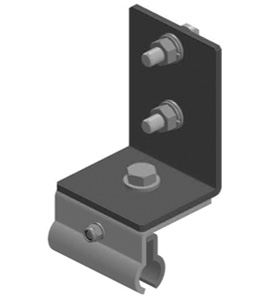
From a technical and engineering standpoint, the equipment must be sized to bear specific loads defined for pedestrian traffic only. The standard load capacity is around 200 kg/m², a value designed to ensure safe passage for an operative carrying their own hand tools. Installing aluminium site walkways requires the utmost care during set-up: access ramps and end supports must rest only on stable, previously compacted ground. To prevent slipping, shifting or overturning caused by vibration from nearby machinery, the support profiles have holes for inserting steel stakes, which anchor the frame rigidly to the ground. Selecting the right model depends on the width of the excavation, bearing in mind that the structure must extend adequately beyond the edges. Compliance with consolidated safety legislation is the primary criterion that should lead contractors to abandon wooden planks for good, as they are prone to bending, rotting and sudden breakage.

Logistics and commercial advantages for merchants: offering the aluminium walkway

From a B2B distribution point of view, handling light-alloy items significantly optimises warehouse logistics. Unlike heavy galvanised steel products, internal handling requires less use of lifting equipment. Displaying and offering a certified site walkway allows builders' merchants to implement targeted cross-selling strategies, pairing these devices with road barriers, safety signs, orange barrier mesh and personal protective equipment. Relying on suppliers with over forty years of experience in the sector, able to guarantee fast shipping and technical support, enables hardware stores to respond promptly to contractors' urgent needs. Including these items in Progetto Rivendita 2.0 offers practical ideas for setting up dedicated site safety areas, solving customers' logistics problems and consolidating the store's role as a qualified technical supplier.

Frequently asked questions

What is the maximum guaranteed load capacity for pedestrians crossing these structures?

The standard reference load capacity for pedestrian traffic is generally certified at 200 kg per square metre. This limit is calculated to support, in complete safety, the weight of the operative, including their personal technical equipment and standard hand tools.

Can the side guardrails be temporarily removed for narrow passages?

No. The side guardrails are mandatory collective protective equipment (CPE) that prevents the risk of falling into the excavation. Removing them invalidates the structure's certification, endangers workers and constitutes a serious breach of site safety regulations.

How is the equipment secured to the edges of an excavation to prevent accidental slipping?

It is secured via the end support profiles, which are pre-drilled. Anchoring is done by driving sturdy steel stakes (usually ground pins or ribbed-bar stakes) directly into the compact ground beyond the sides of the trench, preventing lateral or longitudinal movement.

Are mobile aluminium walkways suitable for mini excavators or construction machinery?

Absolutely not. This equipment is designed and sized exclusively for pedestrian loads. The passage of construction machinery, even light machines such as mini excavators or dumpers, would cause the immediate structural collapse of the light-alloy frame. Vehicles require dedicated vehicle bridges in structural steel.

What is the minimum recommended overlap on the banks to ensure the stability of the site walkway?

Technical guidelines state that the structure must overlap the edges of the excavation by at least 50-60 centimetres on each side. This operating margin ensures that the weight is transferred to a solid, stable section of ground, far enough from the excavation face, which could collapse under load.

Store Locator

Find your nearest FT dealer

Or write to info@ftspa.it for a tailored quote.

Stay up to date