Catalogue

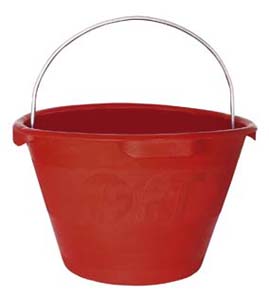
Plastic buckets: heavy-duty professional containers for construction

Site containers are basic equipment for handling liquids, mixing mortars and clearing debris every day. Professional plastic buckets stand clearly apart from DIY versions thanks to the chemical formulation of their polymers, engineered to withstand the highly abrasive action of aggregates and the alkaline aggressiveness of hydraulic binders such as cement and lime.

For a specialist distributor or a trade hardware store, choosing items made from high-density compounds, and avoiding low-grade recycled plastics, is an essential structural requirement. Building contractors need durable equipment for continuous use that will not crack under the concentrated weight of rubble or become brittle during harsh winter temperature swings. Supplying containers with reinforced bases and pull-resistant handle fixings reduces accidental spills and prevents downtime on site. A well-balanced technical range fully covers the work of bricklayers, plasterers and tilers, building the professional customer's loyalty to the store.

Structural features and mechanical strength of the plastic bucket

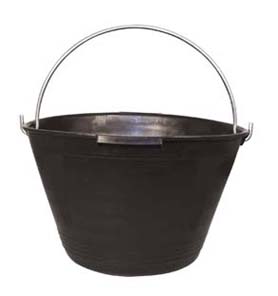
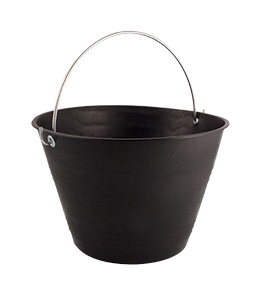
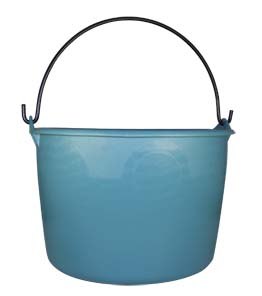
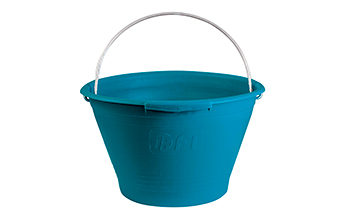
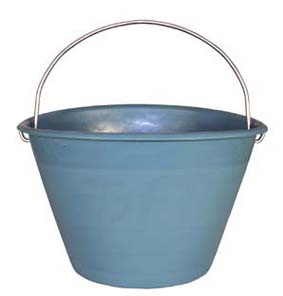
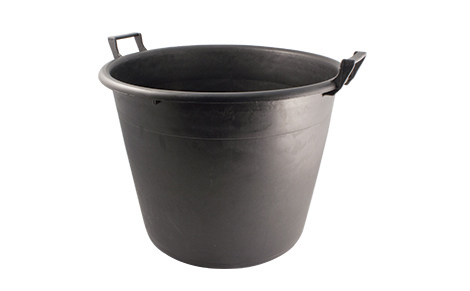
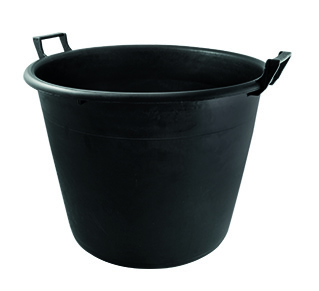
The reliability and lifespan of a builder's bucket depend closely on the geometry of its structure and the flexibility of the material. Products designed for heavy use are made from high-density polyethylene (HDPE), often blended with elastomeric components. This precise chemical composition allows the walls to absorb violent impacts, falls from scaffolding and temporary crushing deformation without reaching breaking point or cracking. The component under the greatest tensile stress is the metal handle, whose design defines the real load capacity of the tool. An industrial-grade handle is made of galvanised steel rod of calibrated thickness, bent into specific shapes to spread the weight of the aggregate evenly over the pivot points of the polymer body, preventing the plastic from collapsing. Further engineering attention goes into the concentric reinforcing ribs on the base: these projections stiffen the bottom, absorb the wear caused by constant scraping on concrete floors and keep the base perfectly flat during mixing.

Operational versatility and protected storage of materials on site

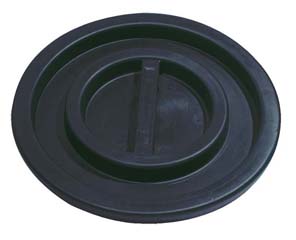
Modern construction requires containers suited to specific work phases, which is why capacities range from 10-12 litres for filling and touch-up work up to formats of over 20 litres, indispensable for mixing self-levelling screeds or thick-bed cementitious adhesives. In terms of logistics and preserving mixes, plastic buckets with lids prove highly strategic. These press-on closures ensure a completely watertight seal when transporting liquids or chemical primers in the contractor's vans, isolating the cab from fumes and preventing spills caused by road vibration. On site, sealing the mix stops moisture loss and significantly slows the surface setting of mortars and skim coats; the operator can stop applying and resume hours later without finding hardened waste at the bottom, cutting the hidden costs of waste.

Logistics optimisation and cross-selling for the hardware store

From a commercial and B2B logistics standpoint, the tapered shape of these items makes them fully nestable. Stacking empty units maximises shelf space, making warehouse storage easier and rationalising the transport costs of pallets arriving at the store. Following the Progetto Rivendita 2.0 guidelines, these products should be displayed so as to drive technical cross-selling. Displaying the containers next to pallets of pre-mixed products, plasters or cementitious adhesives triggers immediate complementary purchases. At the same time, the construction bucket acts as a driver for sales of specific hand tools: trowels, notched trowels, floats and grout-cleaning equipment. Offering professionals containers tested to withstand the abrasive rotation of electric mixer paddles enhances the hardware store's reputation, raising the perceived quality of its whole consumables range.

Frequently asked questions

How can hardened mortar residue be removed effectively without splitting the base of the container?

Thanks to the flexible nature of HDPE compounds, simply turn the empty item upside down and apply light pressure or tap the outer walls and base by hand. The controlled deformation of the plastic mechanically detaches the rigid block of cement, with no need for metal chisels, which would permanently score the inner surface and make the tool unusable.

Are standard construction containers suitable for long-term storage of chemical solvents or paint thinners?

No. Although high-density polyethylene resists the alkalinity of cement well, continuous exposure to aggressive solvents (such as cellulose thinners or acetone) dissolves the plasticisers and alters the polymer structure. Highly aggressive volatile organic compounds must be stored in dedicated metal jerry cans or tins.

What load can the metal handle of a traditional 10-litre builder's bucket bear?

Professional models are tested to bear static and dynamic loads greater than their filling volume. A traditional builder's bucket full of wet lime-cement mortar weighs about 20-22 kg. The galvanised handle, 4-5 mm in diameter and secured to reinforced fixing points, is designed to withstand up to 35-40 kg under tension without permanent deformation.

Does prolonged exposure to winter night frost on site affect the equipment's flexibility?

High-end professional versions incorporate specific additives in the polymer matrix. This treatment prevents the material from crystallising and becoming brittle at temperatures close to or below freezing, allowing the item to withstand knocks and drops in the morning without shattering, a problem that is common in untreated recycled plastics.

Can an electric mixing paddle be used directly inside plastic containers?

Yes, but with specific precautions. Technical containers have reinforced bases precisely to resist mechanical abrasion, but the operator must keep the paddle upright and a few millimetres above the base. Direct, prolonged pressure of the rotating steel against the polymer would accidentally mill away the plastic.

Store Locator

Find your nearest FT dealer

Or write to info@ftspa.it for a tailored quote.

Stay up to date