EQUIPMENT

Aluminium ladders: certified equipment for working at height

Working at height has historically been one of the main causes of serious injury on construction sites. For temporary access to work levels or for short-term transitional tasks, aluminium ladders are the tool of choice thanks to their excellent ratio between specific weight and structural mechanical strength. Unlike old iron or wooden solutions, the light alloy is rust-proof and can easily be moved by a single operator, reducing set-up times on site.

For a technical hardware store or a specialist B2B retailer, supplying rigorously certified equipment is not just a sale, but a genuine legal safeguard for the client company. It is essential to offer only products that comply with the strict European standard UNI EN 131, tested to bear a guaranteed load of 150 kg. A professional, compliant range protects employers from the severe inspection penalties provided for by Legislative Decree 81/08 (D.Lgs. 81/08), ensuring geometric stability and safety for the end user during the critical phases of climbing, standing at height and descending.

The operational versatility of convertible aluminium ladders

In complex work settings, such as asymmetrical stairwells, steep changes in level or confined indoor spaces, the adaptability of the equipment is essential. This flexibility is provided by multi-configuration models, which let the operator quickly switch from stepladder mode (double- or single-sided access) to a fully leaning ladder. The structural strength of professional aluminium ladders can be recognised by the extra thickness of the extruded profiles and by the quality of the pressed or die-cast steel hinges, engineered to withstand thousands of opening and closing cycles under load without failing. The mechanically flanged treads, with a ridged surface, prevent safety footwear from slipping even in muddy conditions. A crucial component for safety against sideways tipping is the base stabiliser bar: fitted with high-grip feet, it is now required by recent regulatory updates on all leaning ladders over 3 metres in height.

Reaching greater heights: aluminium extension ladders

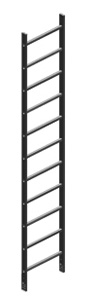
For work on roofs, cornices or blank façades that require access to greater heights, the building trade relies on systems with overlapping sections. These sections can be extended manually, locking them into place rung by rung, or with a rope-and-pulley mechanism that minimises the operator's physical effort when raising the upper section. Outdoor use of these extendable aluminium ladders demands impeccable passive safety devices: deeply ribbed anti-slip feet to grip uneven ground firmly, sturdy high-tenacity anti-spread straps and cast locking hooks that prevent the sections from slipping accidentally under the worker's weight. The generous overlap of the interlocked profiles ensures no dangerous flexing of the stiles, even at the maximum extension permitted by the manufacturer's manual.

Warehouse management, standards and cross-selling for hardware stores

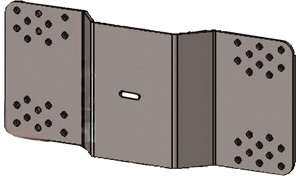
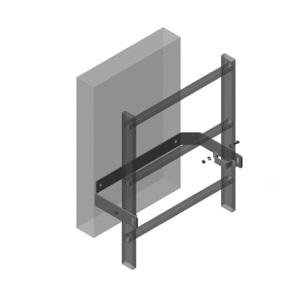
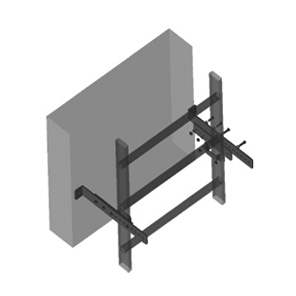
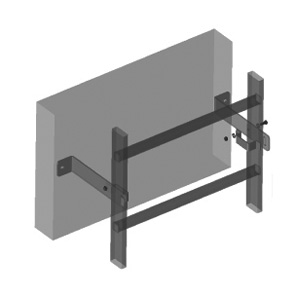
From a B2B distribution perspective, setting up a dedicated section for access at height offers significant logistical and commercial advantages. The telescopic, folding or extension design of this equipment keeps its warehouse footprint to a minimum, optimising vertical storage or horizontal stacking of packages. In store, applying the display principles of the Progetto Rivendita 2.0 makes it easier to implement technical cross-selling strategies. Selling the climbing system goes hand in hand with supplying life-saving Category III personal protective equipment (such as fall-arrest harnesses, helmets with chin straps and work-positioning lanyards) and essential anchoring accessories, such as wall fixing systems or roof hooks to prevent the ladder from slipping. This all-round approach maximises the value of the order and establishes the distributor as an expert safety consultant.

Frequently asked questions

Can an aluminium alloy ladder be used for work near live electrical panels?

No, aluminium is a metal with excellent electrical conductivity. For work on live panels, overhead lines or electrical substations, it is mandatory to use insulating models made of fibreglass, which prevent the risk of accidental electrocution of the operator through direct contact or arc flash.

Can the base stabiliser bar be removed if the ground space is too narrow?

Absolutely not. Removing the stabiliser bar (made mandatory by the EN 131 standard for leaning systems over 3 metres in length) irreparably compromises the safety geometry of the equipment, invalidating CE compliance and exponentially increasing the risk of sideways slipping.

What is the correct angle for safely positioning a ladder leaning against a façade?

The safe working angle for a leaning rung ladder must be between 65 and 75 degrees to the horizontal ground. The rule of thumb on site, recommended by technical manuals, is to place the base at a distance from the wall equal to about a quarter of the total extended length of the ladder.

Do the regulations allow standing on the top step of a stepladder without a guardrail?

No. On double-sided stepladders without an upper platform protected by a guardrail, it is strictly forbidden to stand or work with your feet on the top two or three steps/rungs, to avoid suddenly losing your centre of gravity and the ladder tipping over as a result.

How often must the construction company carry out periodic inspections of this equipment?

The Consolidated Act on Safety (D.Lgs. 81/08) requires a visual check by the operator before every single use. However, equipment intended for work at height must be thoroughly inspected by competent personnel at least once a year. The outcome of the inspection (checks on hinges, feet, rivets and profile deformation) must be formally recorded in the company's maintenance log.

Store Locator

Find your nearest FT dealer

Or write to info@ftspa.it for a tailored quote.

Stay up to date