EQUIPMENT

Load-securing straps: lashing systems for construction logistics

Transporting building materials safely requires certified restraint systems designed to withstand intense stresses. Load-securing straps are essential equipment for fastening precast elements, bricks, pallets and machinery on the beds of commercial vehicles and tipper trucks. For a builders' merchant or a professional technical hardware store, stocking a complete range of these devices means meeting an everyday logistical need of contractors, while ensuring full compliance with the regulations on the carriage of goods by road.

The selection of items for the shelf must be based on strict mechanical parameters: actual load capacity, the resistance of the textile webbing to abrasion and ageing, and the reliability of the tensioning mechanisms. A carefully structured offer allows the B2B retailer to consolidate its role as a qualified supplier, providing practical solutions to prevent accidental load shift, avoid structural damage to goods and protect public and operator safety while in transit.

Types of load-securing strap for transport

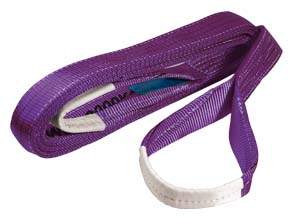
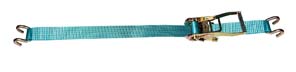
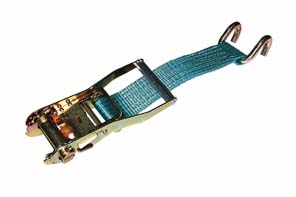
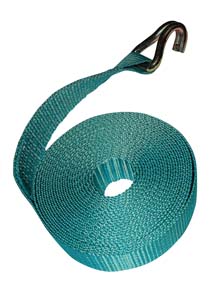
The market offers various designs to suit the specific shapes of loads. Two-part models, fitted with a tensioner and hooks at the ends, are used for direct lashing or for frictional lashing over the vehicle side. Endless versions, made from a single polyester lashing strap, are used for choke tightening, ideal for bundling pipes or metal sections. Steel end fittings range from close-fitting side hooks to claw hooks and safety snap hooks, covering every attachment need on heavy site vehicles.

Technical features of the professional load-securing strap

The effectiveness of a restraint system depends on the quality of its materials and manufacturing specifications. The webbing is mainly made of polyester (PES), a synthetic yarn that ensures low elongation under tension (less than 7%) and retains its mechanical properties at temperatures between -40°C and +120°C. For professional use, it is essential to assess the LC (Lashing Capacity), measured in decanewtons (daN), which indicates the maximum load the strap can bear in straight pull. Galvanised steel mechanical tensioners must deliver an STF (Standard Tension Force) suitable for applying the correct vertical pressure to the load.

Safety standards for every load-securing strap

The manufacture and use of synthetic-fibre lashing systems are strictly regulated by the technical standard UNI EN 12195-2. Under this standard, each strap must carry a visibly sewn-on identification label showing the manufacturer's details, traceability code, technical values, length and yarn material (indicated by the colour of the label, blue for polyester). If this label is missing or illegible, the device may not legally be used and is liable to fines during roadside checks. Ratchet straps intended for lashing must never be used for lifting operations.

The importance of load-securing straps for B2B retailers

Restraint systems fall into the category of fast-moving consumables for building contractors and hauliers. Maintaining a steady, varied stock ensures a regular flow of professionals into the store. To optimise sales, it is advisable to adopt clear display criteria, supported by merchandising approaches such as the Progetto Rivendita 2.0, which help classify products by capacity and type of end hook. Providing technical advice on reading labels and on the correct storage of webbing increases the perceived expertise of the hardware store, building customer loyalty and reducing returns.

Frequently asked questions

How do you read the blue label on polyester lashing straps?

The blue label certifies that polyester is used and shows essential data such as the LC (Lashing Capacity), expressed in daN, and the STF (standard tension force). It also states that the strap must not be used for lifting, the year of manufacture and the mark of conformity with the EN 12195-2 standard.

In which situations must load-restraint systems be withdrawn from use?

The device must be discarded if the webbing shows cuts, deep abrasions, broken load-bearing stitching or damage from contact with chemical solvents. Structural deformation of the metal tensioner, advanced corrosion or simply the loss of the identification label also require the item to be replaced immediately.

What is the practical difference between frictional lashing and direct lashing?

Frictional lashing (or top-over lashing) presses the goods against the vehicle bed, increasing friction through the tension applied by the ratchet. Direct lashing connects the machine's attachment points directly to the vehicle's lashing points, counteracting longitudinal and transverse shifting forces.

Can ratchet straps be used to lift materials on site?

Absolutely not. Current regulations categorically prohibit the use of devices designed for lashing in suspended lifting operations. For such manoeuvres, approved lifting slings or steel wire ropes must be used, governed by separate technical standards.

How do you protect the webbing when securing materials with sharp edges?

Direct contact with sharp profiles, sheet metal or concrete elements accelerates the deterioration of synthetic fibres. To prevent the strap being cut through under high tension, protective sleeves or polyurethane corner protectors must be placed between the textile strap and the edge of the goods being transported.

Do synthetic-fibre straps have a fixed expiry date?

European standards do not set a fixed expiry date for polyester. Withdrawal from service depends on the actual state of wear, intensity of use and any accidental damage found during the visual inspection the operator is required to carry out before the vehicle departs.

Store Locator

Find your nearest FT dealer

Or write to info@ftspa.it for a tailored quote.

Stay up to date