Catalogue

Waterproof clothing: protection and uninterrupted work on site

Construction sites don't stop for bad weather. Keeping work going through the winter months or during heavy rain calls for technical equipment that shields the operator from water, rising damp and mud. Professional waterproof clothing is the primary barrier protecting workers' health, preventing the risks of hypothermia and thermal discomfort that drastically reduce alertness and safety, whether working at height or at ground level.

For a specialist hardware store or a builders' merchant, choosing rainwear means offering contractors durable solutions that far outperform disposable DIY products, which tear the first time they catch on reinforcing bars. It is essential to stock garments made from tear-resistant polymers and footwear able to withstand chemical attack from hydraulic binders and hydrocarbons. A range that complies with current standards, such as UNI EN 343 for protection against rain, establishes the retailer as a reliable partner supplying technical consumables that cut the cost of frequent repurchasing.

Materials and thermal insulation in work rain suits

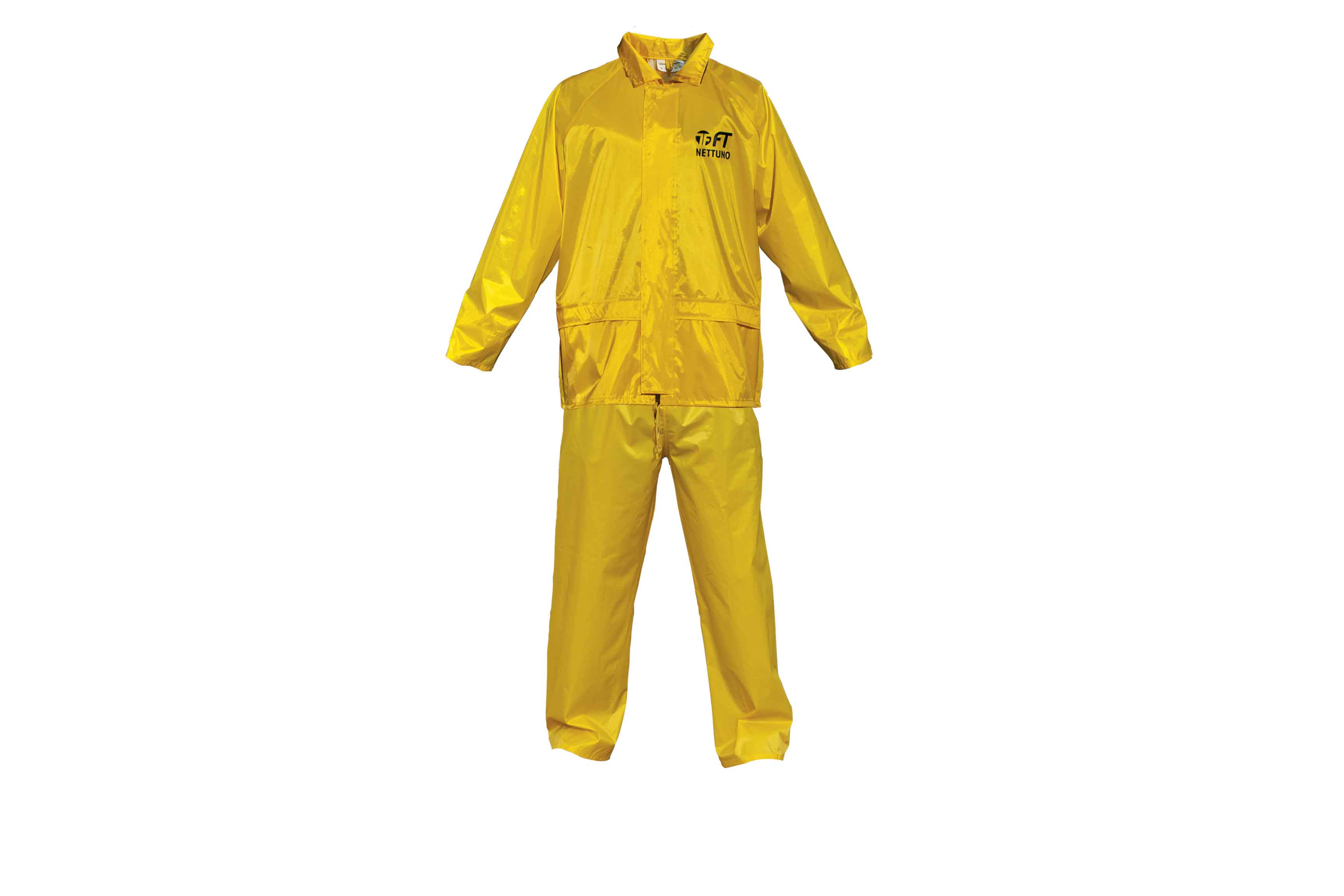
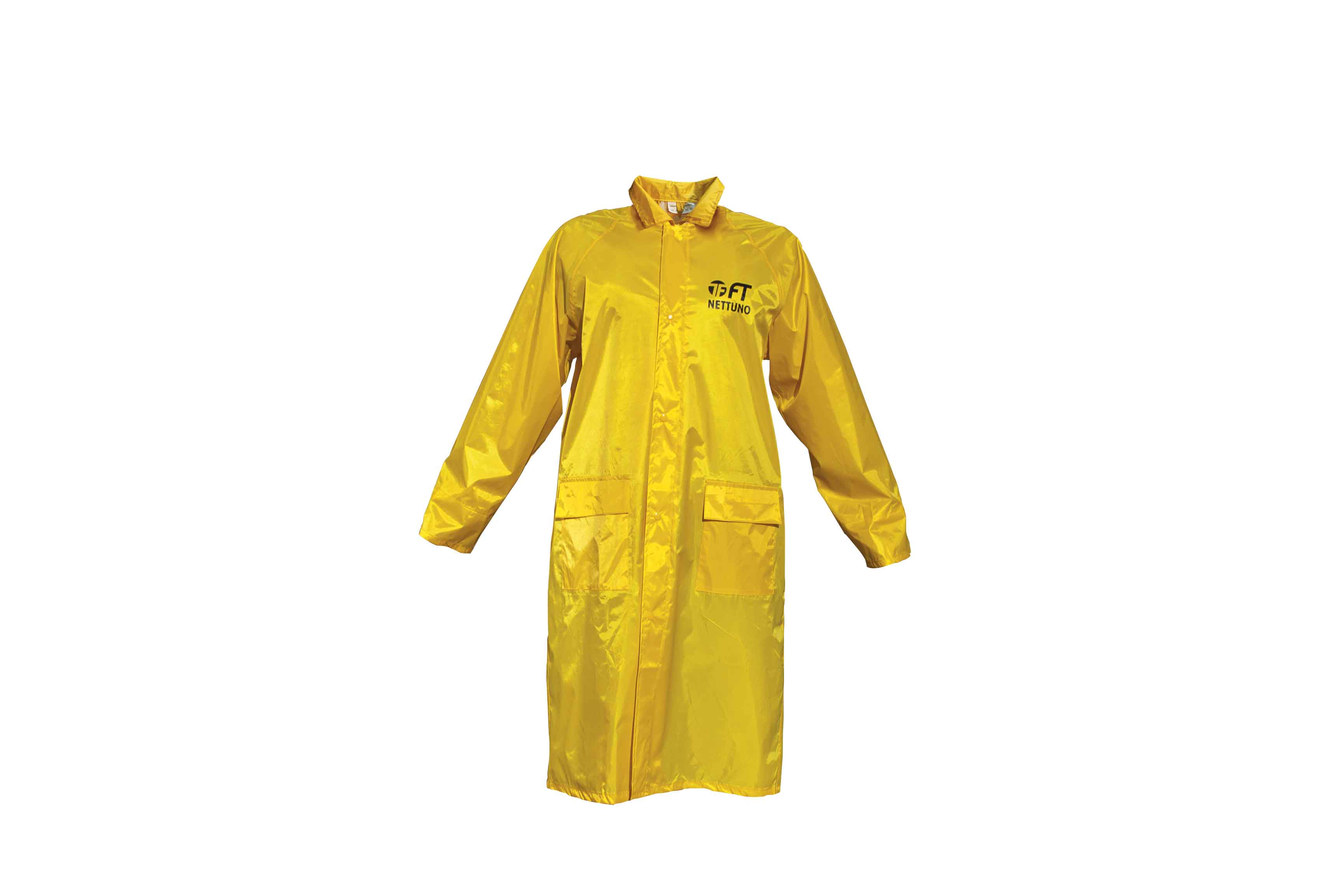
The real effectiveness of work rain suits lies in the structure of the textile base and in the assembly technologies. Garments designed for intensive construction use abandon lightweight plastics in favour of robust polyester substrates coated with polyvinyl chloride (PVC) or polyurethane (PU). This construction guarantees complete impermeability to liquids while maintaining high mechanical resistance to abrasion against scaffolding and brickwork. A decisive construction detail for certification is the absence of traditional needle stitching, which would create preferential paths for water to seep in by capillary action: professional garments use only heat-taped or high-frequency welded seams. The standard kit of waterproof jacket and trousers must also include adjustable cuffs, front closures protected by a double storm flap and shielded back vents. The latter are essential to reduce the condensation caused by physical exertion, allowing body vapour to escape without compromising waterproofing.

Lower-limb protection and grip: PVC work boots

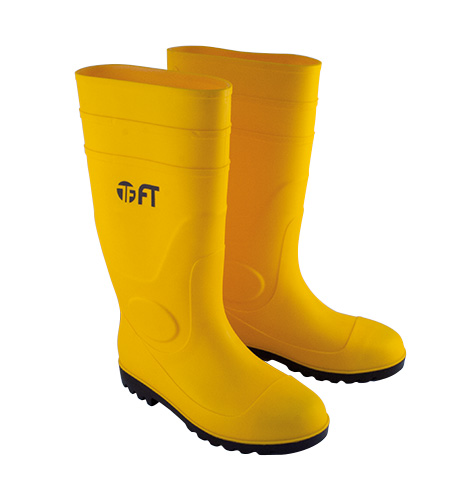
Excavation, pouring concrete for foundations and laying underground utilities expose the legs to prolonged immersion in abrasive mixes and saturated ground. In these extreme conditions, PVC work boots or boots made from specific nitrile compounds temporarily replace leather safety footwear, providing thermal and water insulation up to the knee. Tread geometry plays a critical role in safety: cleated soles with widely spaced lugs are highly self-cleaning, quickly shedding mud and debris to prevent slips on sloping surfaces. It must be stressed that working legally on a construction site requires waterproof safety boots bearing the European S5 marking (standard EN ISO 20345). This classification certifies the presence of a rigid safety toecap against crushing and a puncture-resistant plate built into the midsole, essential to protect the sole of the foot from nails, protruding rebar and sharp rubble hidden in the mud.

Seasonal management and display solutions for hardware stores

Sales of weather-protection items are marked by strong seasonal swings in demand. Optimising warehouse stock ahead of the autumn quarter allows the distributor to meet the urgent needs of contractors caught out by sudden changes in the weather. In the showroom, applying the principles of the Progetto Rivendita 2.0 programme suggests setting up themed display islands. Placing rainwear right next to thermal protective equipment (such as lined gloves and technical socks) and high-visibility clothing triggers highly profitable cross-selling. This logical layout simplifies decision-making for the construction company's buyer, increasing the average order value and positioning the store as a one-stop supplier for kitting out the winter site.

Frequently asked questions

Can internal condensation in PVC-coated garments be avoided during physically demanding work?

Eliminating condensation entirely is difficult, because PVC is a 100% barrier material that keeps water out but also stops body vapour escaping. For physically intensive work, PU (polyurethane) suits are preferable, as they offer partial breathability while remaining waterproof. If PVC is used, it is essential to check that the jacket has mechanical ventilation slots on the back and under the arms.

Is an ordinary rubber gardening boot enough for working on construction sites?

No, Italian Legislative Decree 81/08 (D.Lgs. 81/08) strictly prohibits DIY footwear on construction sites. Standard boots have neither a safety toecap against falling heavy loads nor a puncture-resistant plate. Construction workers must wear only approved footwear with an S5 classification.

How do you remove concrete residue from polymer boots without damaging them?

Boots should be washed with low-pressure water immediately after pouring, before the binder sets. If the cement has already hardened, simply flexing the dry rubber slightly will make the rigid crust break away. Scraping the surface with trowels or using aggressive acid descalers is strongly discouraged, as they would irreversibly degrade the polymer chain and cause the boot to crack.

Are budget PVC suits likely to become brittle and split in winter frosts?

Yes. Entry-level plastic resins tend to crystallise and stiffen dramatically as the temperature approaches freezing. Constant bending during work inevitably cracks the waterproof film. Professional garments use special PVC compounds with additives for cold climates, or polyurethane, tested to stay flexible and intact even at very low temperatures.

Can an accidental tear in a rain jacket be repaired with duct tape?

Duct tape is only a temporary fix: the adhesive deteriorates quickly in contact with water and body movement makes it peel off within a few hours. Watertight repairs require vulcanising sealants or heat-applied patches specific to PVC/PU, although in a B2B setting replacing the damaged garment is often the safest and most economical option.

Do S5 safety boots provide thermal insulation for working in snow or frozen mud?

Not as standard. Standard PVC and nitrile are excellent thermal conductors and quickly transmit the cold to the foot. For winter work in harsh climates, you need S5 boots with the additional "CI" (Cold Insulation) marking, which guarantees a synthetic fur lining or a neoprene insulating layer tested to prevent frostbite.

Store Locator

Find your nearest FT dealer

Or write to info@ftspa.it for a tailored quote.

Stay up to date